
Space photos are some of the most beautiful images humanity has ever produced.
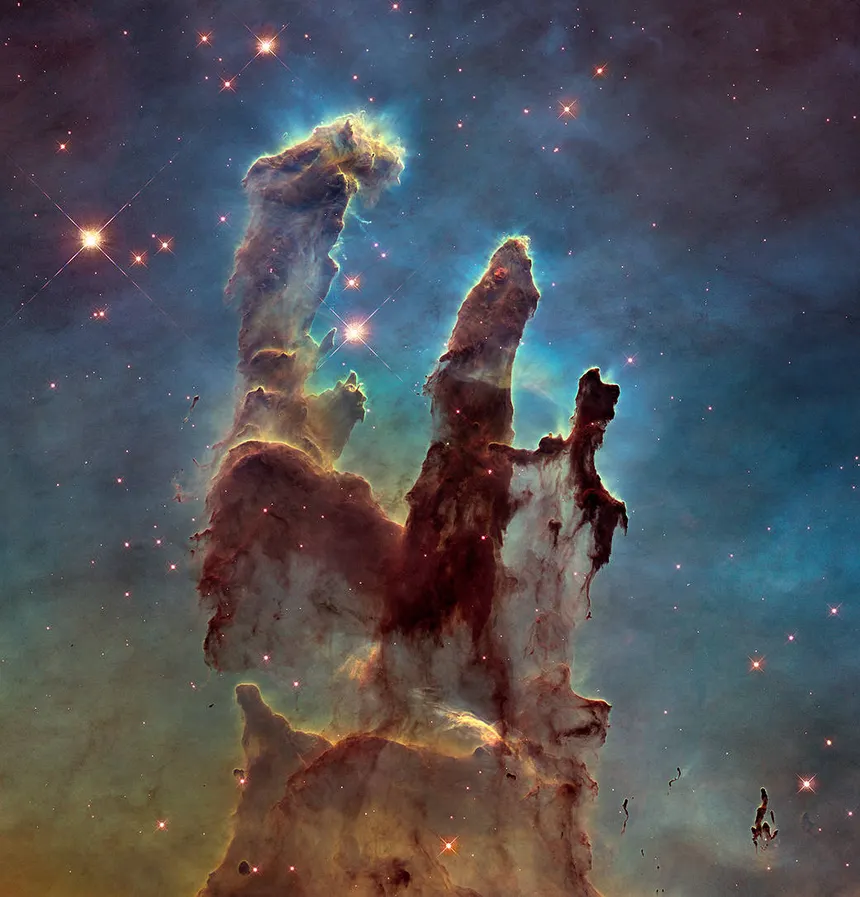
Pillars of Creation is a photograph taken by the Hubble Space Telescope that depicts elephant trunks of interstellar gas and dust in the Eagle Nebula of the Serpens constellation, some 6,500–7,000 light-years (2,000–2,100 pc) from Earth.
Nebulas glowing in impossible colours. Galaxies stretching across the darkness. Planets floating like polished marbles in the black. The kind of images that make you stare at your screen for a second longer than planned and quietly question your entire existence.
But there is one question that always follows them.
Are these photos actually real?
Or are we looking at edited, colourised, cleaned up versions of space that would look completely different if we could somehow fly there ourselves?
The honest answer is this:
Yes, space photos are real.
But no, they are not always what your eyes would see.
And that difference is where things get interesting.
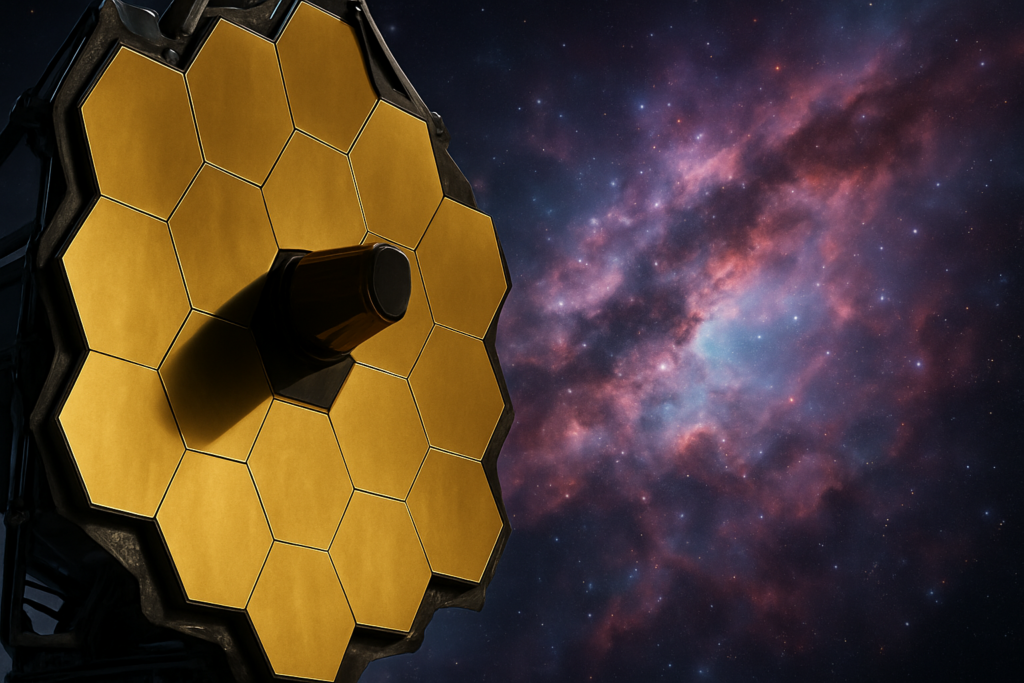
Space Telescopes Do Not See Like Human Eyes
When people imagine a telescope taking a picture, they usually picture something like a giant camera pointing at the sky and snapping a colourful photo.
That is not really how it works.
Many space telescopes and spacecraft collect light through filters. These filters isolate different wavelengths of light, including some that human eyes can see and some that we cannot. The telescope may record these exposures as black and white images, because the detector is measuring brightness and detail, not taking a normal holiday photo.
Later, scientists and image specialists combine those exposures into a final image.
That final image may use colour to represent different wavelengths, gases, temperatures, structures, or chemical elements.
So when you see a dramatic image from Hubble or James Webb, you are often looking at a carefully built scientific image, not a quick snapshot.
That does not make it fake.
It makes it translated.
Why Are Space Images Colourised?
The biggest misunderstanding is colour.
People hear the word “colourised” and immediately think something has been invented.
But colour in astronomy is often used to reveal information that would otherwise be invisible.
For example, hydrogen, oxygen, sulfur, dust, stars, and hot gas can all emit or reflect light in different ways. By assigning colours to different filters or wavelengths, scientists can show structures that would be very hard to understand in a plain image.
This is especially important with telescopes like James Webb, which sees mainly in infrared light.
Infrared light is real, but human eyes cannot see it. So if Webb observes something in infrared, that data has to be translated into visible colours for us to understand it.
Think of it like a thermal camera.
The heat map colours are not what your eyes would see, but the information is real. The colours help your brain understand the data.
Space images work in a similar way.
The universe is not being “Photoshopped into existence.”
It is being made visible.
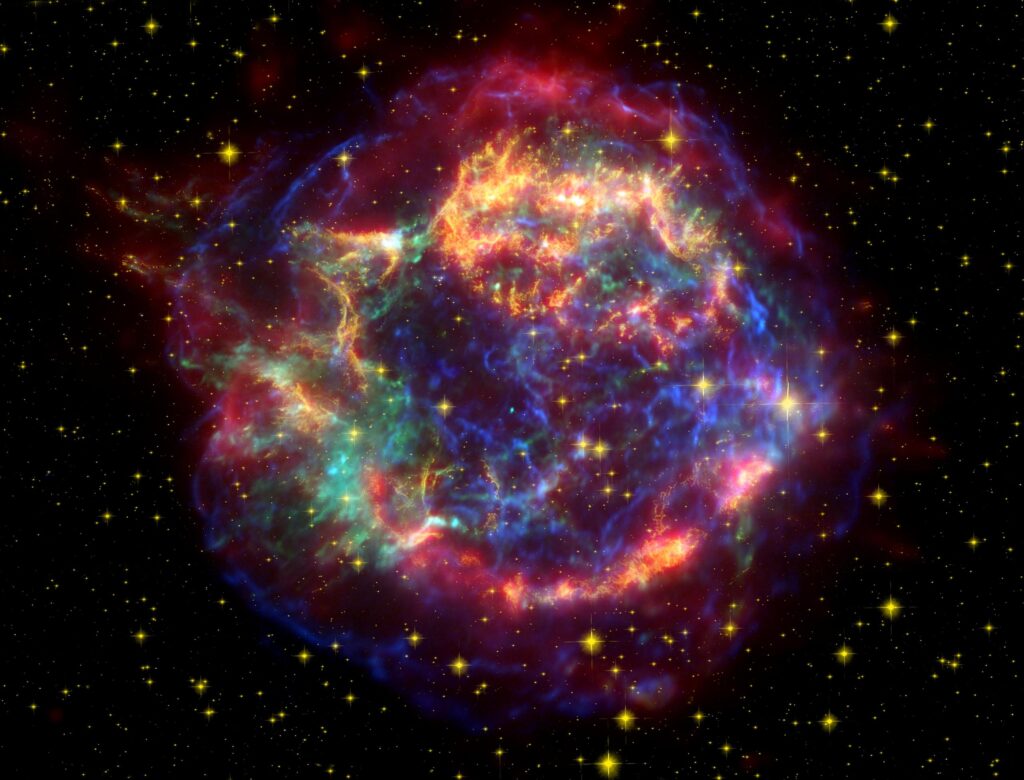
Cassiopeia A Supernova Remnant Credit line: NASA / JPL Caltech / O. Krause, Steward Observatory
So Are NASA Images Edited?
Yes.
But “edited” does not automatically mean “fake.”
Editing can include cleaning noise, combining exposures, adjusting contrast, correcting brightness, sharpening details, removing detector artefacts, and assigning colours to different wavelengths.
That is normal scientific image processing.
Even regular phone photos are processed automatically. Your phone adjusts colour, contrast, brightness, sharpness, and noise before you ever see the final picture. Nobody panics and says your lunch was government propaganda because your camera made the chips look crispier.
Space images are processed for a reason.
The goal is not to deceive people.
The goal is to show information clearly.
The important question is not “was this image processed?”
The important question is “was the processing honest?”
With official scientific images, agencies usually explain what telescope or spacecraft captured the data, what wavelengths were used, and how the image was created.
That transparency is what separates scientific processing from fake imagery.
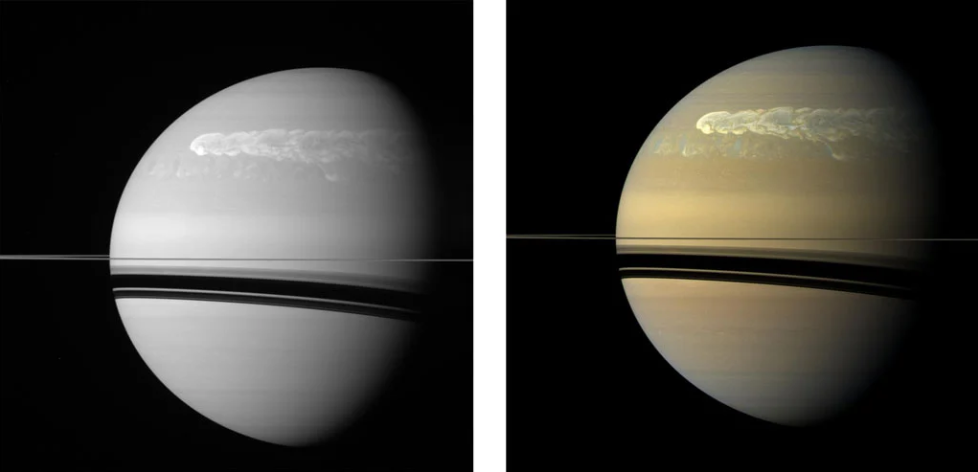
At left is an unprocessed, or raw, image from NASA’s Cassini spacecraft. The image was taken using a filter that lets red wavelengths of light pass through to the camera’s sensor. This image and two others, taken in green and blue light, were combined to create the color view at right. Credit: NASA/JPL-Caltech/SSI
Real Colour vs False Colour
There are different types of space images.
Some are closer to what we might call natural colour. These try to approximate what human eyes could see if the object were bright enough and close enough.
Others are false colour images. These use colours to represent light outside human vision, or to highlight different materials and structures.
False colour sounds suspicious, but it is incredibly useful.
It can reveal where certain gases are located. It can show shockwaves, star forming regions, dust clouds, magnetic structures, or heat signatures. It can turn invisible information into something humans can actually interpret.
In other words, false colour does not mean false science.
It means the colours are being used as a map.
A very pretty map, admittedly.
The kind of map that makes you want to quit your job and stare at nebulae all day, which is financially irresponsible but spiritually understandable.
Why Do Some Space Images Look Too Perfect?
Because space agencies release images designed to communicate science to the public.
That means the final image has to be accurate, but also understandable and visually clear.
Raw data from telescopes can look underwhelming. It may be dark, noisy, monochrome, or split across multiple files. The final public image is created by turning that data into something people can actually read with their eyes.
This is why the same object can look different depending on the telescope, wavelength, filters, and processing choices.
A nebula photographed in visible light may look one way.
In infrared, it may look completely different.
In X rays, it may reveal violent high energy activity you would never see otherwise.
Same object.
Different layer of reality.
That is the part people miss.
Space is not one image. It is a stack of hidden information, and different instruments peel back different layers.
The Real Problem: AI Space Images
There is one place where people should be more careful.
AI generated space images.
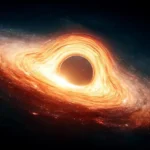
Unlike processed telescope images, AI images are not based on real observational data unless clearly stated. They can look beautiful, but they may show planets, galaxies, nebulae, or black holes that do not actually exist.
That is where confusion starts.
A processed NASA or ESA image is usually built from real telescope data.
An AI generated image is built from patterns learned from other images.
Both can look impressive, but they are not the same thing.
For a science page, YouTube channel, or blog, that distinction matters.
Using real mission data builds trust.
Using random AI space art without saying so damages trust.
And online trust is hard to win back once people realise you have been feeding them cosmic wallpaper soup.
So What Is The Truth?
Space photos are real, but they are often processed.
They may not show space exactly as human eyes would see it.
They often reveal things our eyes could never see at all.
That does not make them fake.
It makes them more powerful.
The final image is a bridge between raw scientific data and human understanding. It takes something distant, faint, invisible, or complex, and turns it into something we can finally see.
So the next time someone says, “NASA photos are edited,” the correct answer is:
Yes.
And that is exactly why we can see the universe in the first place.
Space is not less real because we process the images.
It is more real than our eyes can handle.
Proudly powered by WordPress