
The James Webb Space Telescope has just looked at one of the strangest worlds near our Solar System and found something unexpected in its atmosphere.
Salt clouds.
Yes, actual salty clouds.
The object is called GJ 504 b, but it is better known by its nickname:
The Pink Planet.
It sits about 57 light years from Earth and has been puzzling astronomers since its discovery in 2013. At first glance, it sounds like a giant exoplanet. It orbits a star. It glows faintly. It has an atmosphere. It is often described as a planet.
But there is a problem. GJ 504 b may be too massive to be a normal planet.
New observations from the James Webb Space Telescope suggest it could be around 25 times the mass of Jupiter, placing it near the boundary between a giant planet and a brown dwarf.
That makes this discovery more than just “Webb found salt in space.”
This is about a strange pink world that might not even be a planet at all.
And somehow, that is only the beginning.
What Did James Webb Discover?
Using the James Webb Space Telescope, astronomers studied the light coming from GJ 504 b and broke it apart into different wavelengths.
This method is called spectroscopy. It sounds painfully technical, but the idea is simple.
Different molecules leave different fingerprints in light. If you can read those fingerprints, you can work out what chemicals are present in an atmosphere.
Webb found evidence for several molecules in the atmosphere of GJ 504 b, including:
Water vapor
Carbon dioxide
Methane
Ammonia
Hydrogen sulfide
And most surprisingly:
Salt clouds
That last part is the headline.
Clouds are already difficult to model on planets outside our Solar System. But salt clouds make the atmosphere of GJ 504 b even more unusual. This is not like Earth’s fluffy white clouds floating gently over a countryside field while someone pretends they are about to go for a healthy walk. These are exotic clouds in the atmosphere of a giant alien world, made under conditions very different from anything we experience here.
Space, as usual, has decided normal weather was not dramatic enough.
What Is the Pink Planet?
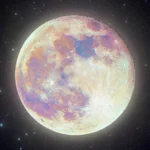
GJ 504 b was discovered in 2013 and became famous because of its unusual colour.
NASA has previously described it as glowing with a dull magenta colour, almost like a dark cherry blossom. That is where the nickname Pink Planet comes from. But despite the nickname, GJ 504 b is not a cosy pink holiday world. It is a massive, hot, distant object orbiting a Sun like star. It is also unusual because it was directly imaged, meaning astronomers were able to detect it by separating its faint light from the much brighter light of its parent star. That is extremely difficult, because stars are bright and planets are faint.
Trying to see a planet next to its star is a bit like trying to spot a firefly next to a stadium floodlight. Except the floodlight is 57 light years away. And the firefly may be a failed star.
Is GJ 504 b Actually a Planet?
This is where things get messy. GJ 504 b is often called a planet, but scientists are not completely sure what it is.
It may be a giant exoplanet. Or it may be a brown dwarf.
A brown dwarf is sometimes described as a failed star. That does not mean it had dreams and disappointed its parents. It means it formed with more mass than a planet, but not enough mass to sustain normal hydrogen fusion like a true star. The new Webb analysis suggests GJ 504 b may be around 25 times the mass of Jupiter.
That is huge.
For comparison, Jupiter is already the largest planet in our Solar System. So when something is many times more massive than Jupiter, astronomers start asking whether it formed like a planet or more like a star. That is why GJ 504 b is so interesting. It sits in the awkward middle ground between categories. Not quite a normal planet. Not quite a star.
Basically the cosmic version of “it’s complicated.”
Why Are Salt Clouds Important?
The salt clouds matter because they help scientists understand the atmosphere of GJ 504 b.
When astronomers first model an alien atmosphere, they try to match the telescope data with different combinations of temperature, chemistry, pressure and clouds. Without the right cloud model, the atmosphere may not make sense. In this case, adding salt clouds helped explain the spectrum observed by Webb. That means the salt clouds are not just a funny detail. They may be necessary to understand what the object is really like.
This matters for exoplanet science because clouds can hide or change the chemical signatures astronomers are trying to measure. If you do not understand the clouds, you may misunderstand the atmosphere. And if you misunderstand the atmosphere, you may misunderstand the entire planet. Or possible brown dwarf. Because apparently even naming the thing is not straightforward.
Why Webb Was Needed
GJ 504 b is faint. Very faint.
Ground based telescopes had already studied it, but Webb gave astronomers a much clearer view of its atmosphere.
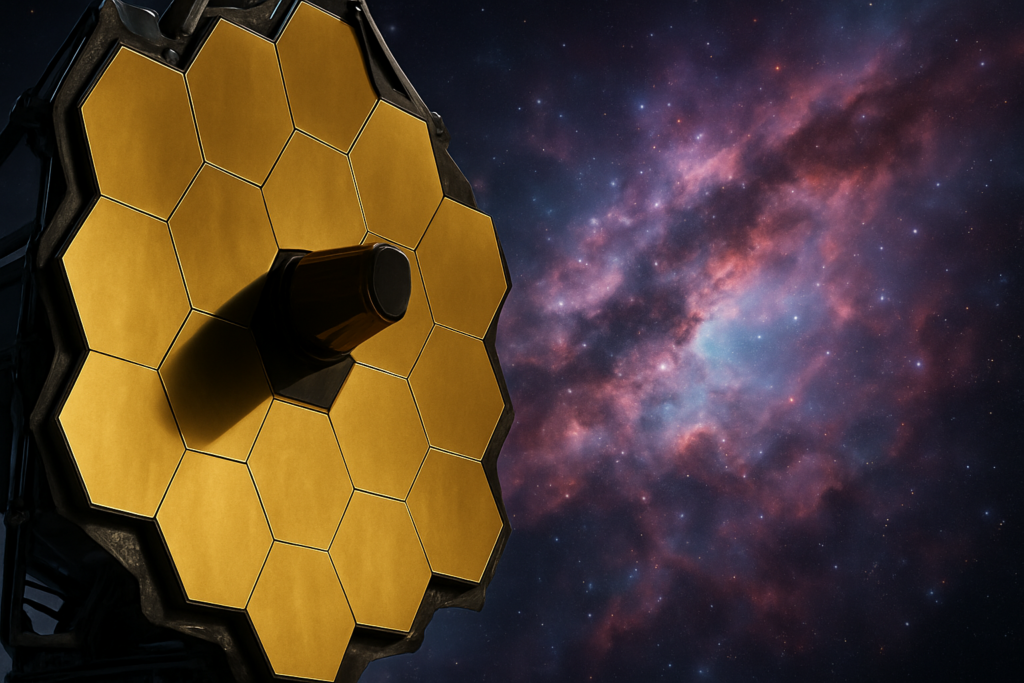
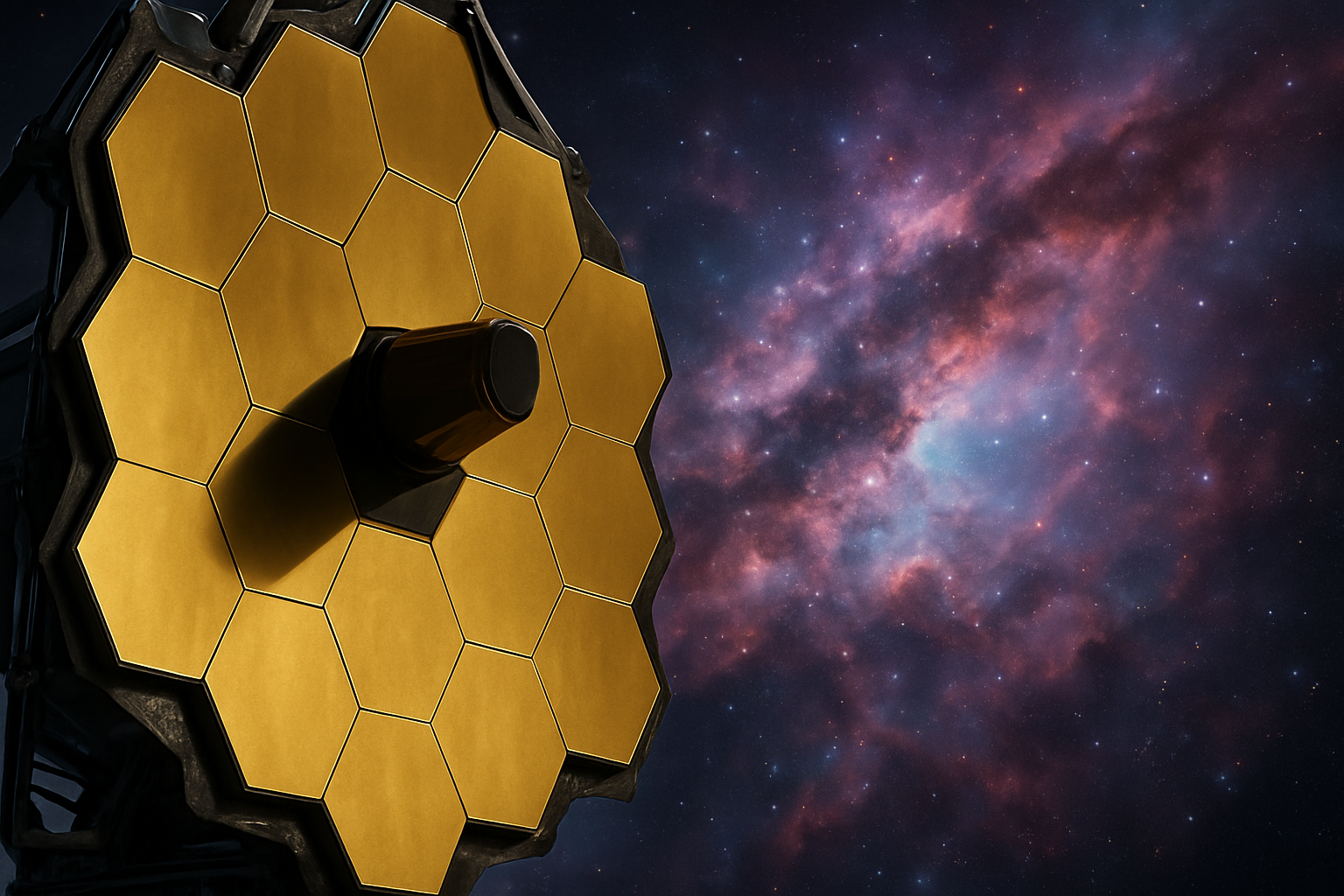
The James Webb Space Telescope is especially powerful because it observes infrared light. Infrared observations are extremely useful for studying cool, faint objects like distant exoplanets and brown dwarfs. Webb can collect detailed spectra from objects that are incredibly difficult to study from Earth. That is why this discovery is not just about GJ 504 b.
It shows what Webb can do for the next generation of exoplanet research. We are no longer just finding planets. We are starting to read their atmospheres. That is a massive shift.
A few decades ago, detecting planets around other stars was already a major achievement. Now we are studying molecules and cloud chemistry on strange worlds dozens of light years away. Astronomy has gone from “there might be planets out there” to “this weird pink thing has salty clouds.” That is not progress.
That is showing off.
What Chemicals Did Webb Find?
The Webb observations revealed a rich atmosphere. Scientists reported signs of molecules including water, carbon dioxide, methane, ammonia and hydrogen sulfide. Each of these tells astronomers something different. Water vapor can reveal details about temperature and chemistry. Methane and ammonia are important in cooler atmospheres. Carbon dioxide can help trace atmospheric composition. Hydrogen sulfide adds another layer to the chemical picture.
Together, these molecules help scientists build a model of what the atmosphere is like. But the strange part is that the data did not fully make sense until clouds were included. And the cloud type that fit best? Salt clouds.
That suggests GJ 504 b has an atmosphere where exotic cloud chemistry plays a major role. This is the kind of detail that makes alien worlds feel less like dots on a chart and more like real places. Terrifying, unreachable, scientifically rude real places.
Why Does This Discovery Matter?
This discovery matters for three big reasons. First, it gives astronomers a better understanding of GJ 504 b itself.
For years, this object has been difficult to classify. Is it a giant planet? Is it a brown dwarf? Did it form like a planet in a disk around its star, or did it form more like a star from collapsing gas? The new Webb data does not solve every question, but it gives scientists a much sharper chemical and atmospheric picture. Second, it helps scientists understand cold planetary mass companions. These are objects that sit in the grey zone between planets and brown dwarfs. They are hard to study, but they may be common enough to matter in how we understand planetary systems.
Third, it proves that clouds can seriously affect how we interpret alien atmospheres. That matters beyond GJ 504 b. If clouds can change what Webb sees in this object, then clouds may also affect how scientists interpret other exoplanets, including planets that are smaller, cooler or more Earth like. The lesson is simple:
Alien atmospheres are complicated. The universe did not build them for easy spreadsheet work.
Could There Be Life on the Pink Planet?
No.
At least, there is no reason to think GJ 504 b is habitable. This is not an Earth like world. It is a massive gas giant or brown dwarf type object with an extreme atmosphere, high temperatures and no solid surface like Earth. The presence of molecules such as methane or water vapor does not mean life has been found.
This is important because the internet loves to see one molecule and immediately start packing for aliens. Methane can be connected to life in some environments, but it can also form through non biological processes. Water vapor is important, but it does not automatically mean habitability. In this case, the real story is not life. The real story is atmospheric chemistry. GJ 504 b is helping scientists understand how strange giant worlds form, cool, evolve and hide their secrets behind clouds. Which is still pretty exciting.
Not every space discovery needs aliens.
Sometimes salty pink cosmic weirdness is enough.
How Far Away Is GJ 504 b?
GJ 504 b is about 57 light years away. That means the light Webb studied left the system 57 years ago.
When you hear “nearby” in astronomy, remember that astronomers use that word differently from normal people.
To astronomers, 57 light years is relatively close. To everyone else, it is so far away that your sat nav would simply resign. Still, by cosmic standards, GJ 504 b is close enough to be an excellent target for detailed study.
That is one reason Webb was able to analyse its atmosphere. It is distant, but not impossibly distant. Just impossibly distant for anything with passengers, snacks and expectations.
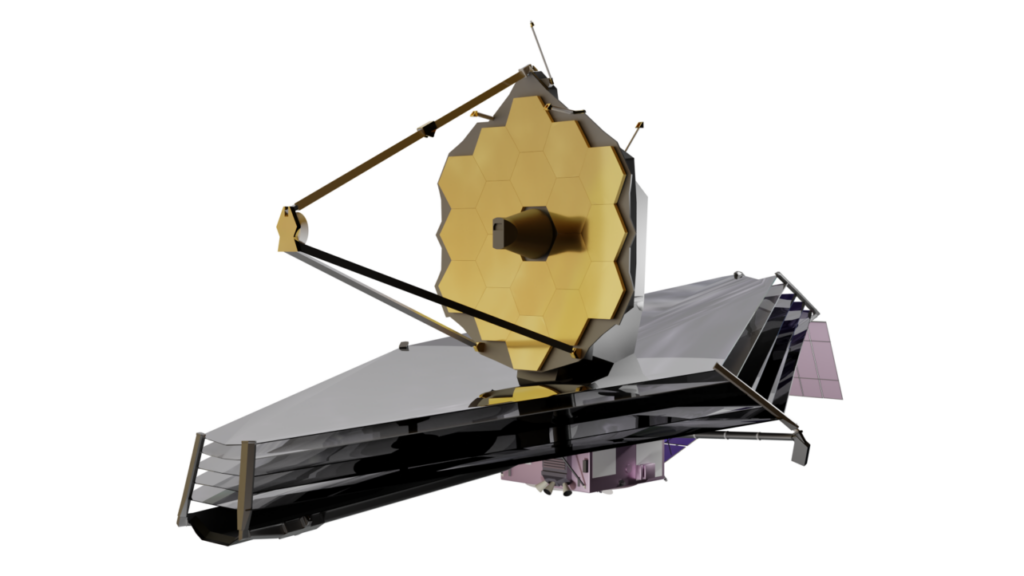
The James Webb Space Telescope has found strong evidence for salt clouds in the atmosphere of GJ 504 b, the famous Pink Planet. But GJ 504 b may not be a normal planet at all. It appears to be extremely massive, possibly around 25 times the mass of Jupiter, which means it may be closer to a brown dwarf than a regular exoplanet.
Webb also detected signs of several molecules in its atmosphere, including water vapor, carbon dioxide, methane, ammonia and hydrogen sulfide. The discovery matters because it shows how complex alien atmospheres can be, and how important clouds are when scientists try to understand distant worlds. The Pink Planet is not just pink.
It is massive. It is chemically strange. It may not even be a planet.
And now, thanks to Webb, we know it may be hiding behind salty clouds.
Which is exactly the kind of nonsense the universe keeps doing when nobody asked it to be this interesting.

FAQ
What is the Pink Planet?
The Pink Planet is the nickname for GJ 504 b, a massive object orbiting a Sun like star about 57 light years from Earth.
Why is GJ 504 b called the Pink Planet?
It earned the nickname because earlier observations suggested it glows with a dull magenta or pinkish colour.
What did James Webb discover on GJ 504 b?
James Webb found evidence for salt clouds in the atmosphere of GJ 504 b, along with molecules such as water vapor, carbon dioxide, methane, ammonia and hydrogen sulfide.
Is GJ 504 b actually a planet?
Scientists are not completely sure. GJ 504 b may be a giant exoplanet, but its high mass means it could also be a brown dwarf.
What is a brown dwarf?
A brown dwarf is an object more massive than a planet but not massive enough to become a normal star powered by sustained hydrogen fusion.
Are salt clouds common on exoplanets?
Salt clouds are not something we commonly detect in exoplanet atmospheres. This discovery shows how unusual and complex some alien atmospheres can be.
Could there be life on GJ 504 b?
There is no evidence that GJ 504 b is habitable. It is a massive gas giant or brown dwarf type object, not an Earth like planet.
How far away is GJ 504 b?
GJ 504 b is about 57 light years from Earth.
Sources
The Astronomical Journal preprint: JWST TST High Contrast: First Direct Spectroscopy of GJ 504 b Reveals Clouds and Possible Metal Enrichment
Space.com: James Webb Space Telescope Finds a Salty Surprise on Famous Pink Planet
NASA Exoplanet Catalog: GJ 504 b