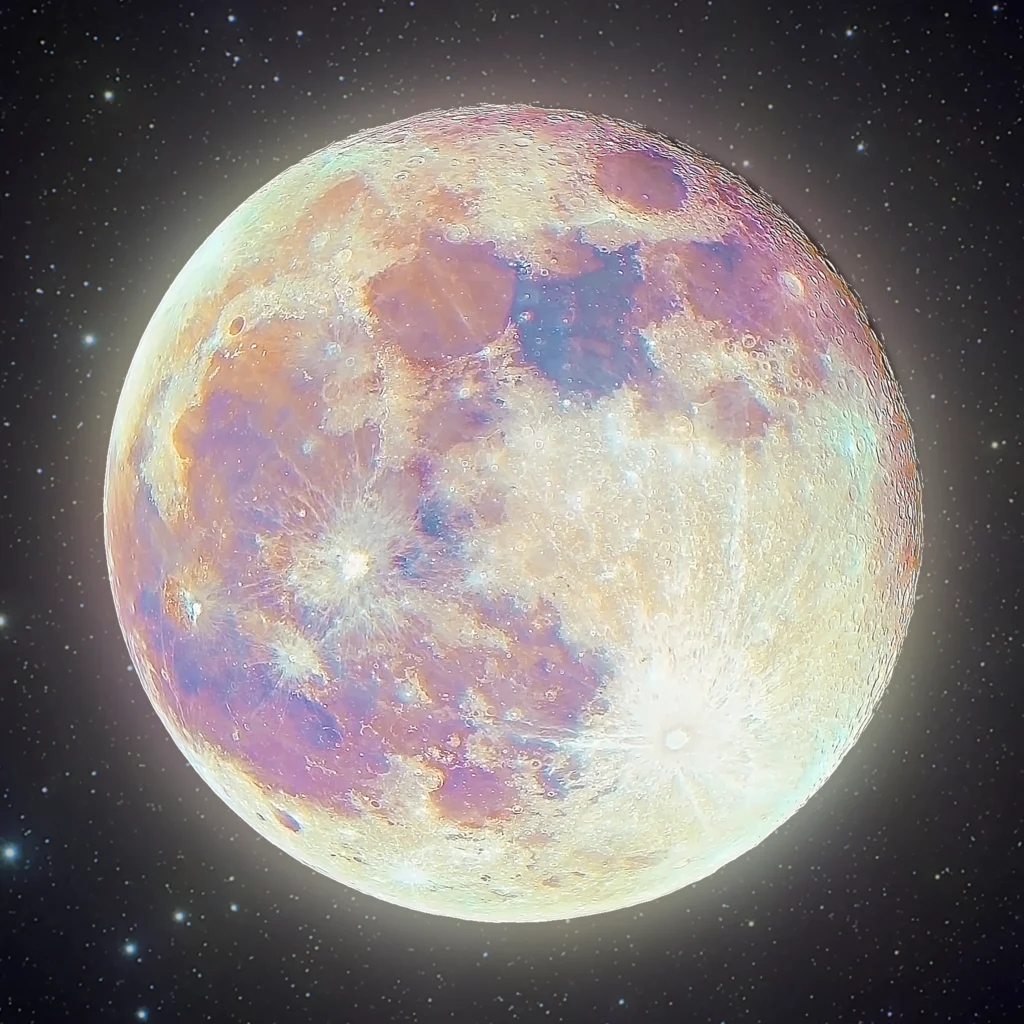

The Moon looks close.
It hangs above us like a bright white coin in the sky. Sometimes it looks huge near the horizon. Sometimes it feels so familiar that it almost seems like it is just sitting above the clouds.
But the Moon is much farther away than it looks.
It is not local. It is our nearest major neighbour in space, but “nearest” in astronomy still means ridiculously far away.
The Average Distance to the Moon
The average distance from Earth to the Moon is:
238,855 miles
Or:
384,400 kilometres
This is the number you will usually see when people ask, “How far away is the Moon?”
But there is one important detail.
That number is an average. The Moon does not orbit Earth in a perfect circle. Its orbit is slightly stretched, which means the distance between Earth and the Moon changes throughout the month.
Sometimes the Moon is closer. Sometimes it is farther away.
So when we say the Moon is around 384,400 kilometres away, we are talking about the average distance, not the exact distance at every moment.
Space likes to make simple questions slightly annoying. Classic.
Why Does the Moon’s Distance Change?
The Moon’s orbit around Earth is not perfectly circular.
It is elliptical.
That means the Moon travels around Earth in a slightly oval shaped path. Because of this, there are times when it is closer to Earth and times when it is farther away.
The closest point in the Moon’s orbit is called perigee.
The farthest point is called apogee.
When the Moon is near perigee, it appears slightly larger and brighter in the sky. When it is near apogee, it appears slightly smaller.
This is one of the reasons the Moon does not always look exactly the same size from Earth.
The difference is real, but it is not always easy to notice with your eyes alone. Your brain also plays tricks on you, especially when the Moon is low near the horizon. That famous “huge Moon” effect is often caused more by perception than by the Moon suddenly deciding to cosplay as a planet.
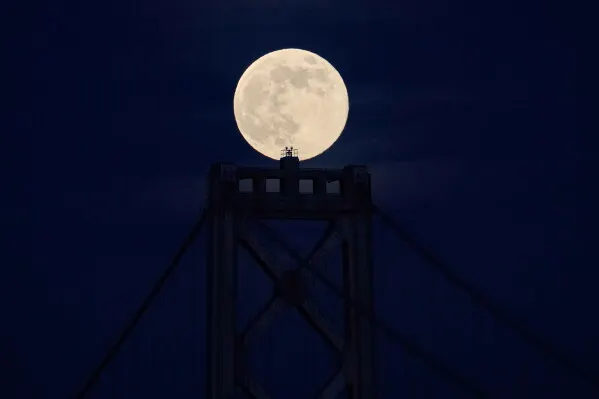
What Is a Supermoon?
A supermoon happens when a full Moon occurs near the closest part of its orbit around Earth.
Because the Moon is closer than usual, it can appear a little larger and brighter in the sky.
But let’s be honest. The word “supermoon” sounds more dramatic than the effect usually looks.
It is not like the Moon suddenly fills half the sky and blocks your neighbour’s WiFi. Most people would not notice the difference unless they knew what to look for or compared photos carefully.
Still, supermoons are interesting because they remind us that the Moon is not fixed at one exact distance.
It is constantly moving around Earth in a changing orbit.
How Long Does Light Take to Travel From the Moon to Earth?
Light from the Moon takes about 1.3 seconds to reach Earth.
That means when you look at the Moon, you are seeing it as it was roughly 1.3 seconds ago.
That might not sound like much, but it is still a delay. The Moon is far enough away that even light needs over a second to cross the gap.
For comparison, sunlight takes about 8 minutes to reach Earth.
So the Moon is close by cosmic standards, but still distant enough to make you realise space has absolutely no respect for normal human scale.
How Long Does It Take to Get to the Moon?
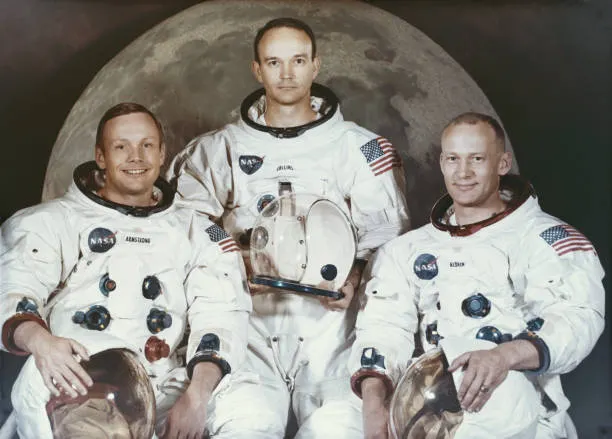
The Apollo missions took about three days to travel from Earth to the Moon. That does not mean the spacecraft flew in a straight line at one constant speed like a car on a motorway. Space travel is not that simple.
A spacecraft has to launch from Earth, enter the correct trajectory, coast through space, adjust its path, and line up with the Moon’s motion. The Moon is not sitting still waiting politely. It is orbiting Earth while the spacecraft is trying to reach it. So when people ask how long it takes to get to the Moon, the simple answer is:
Around three days for crewed Apollo style missions.
Different missions can take different amounts of time depending on the spacecraft, route, fuel use, and mission design.
Could You Drive to the Moon?
Technically, if there were a road to the Moon, which there absolutely is not, the distance is still absurd.
At motorway speed, the trip would take months.
At walking speed, it would take years.
And that is before we deal with the minor problem of no air, no road, no petrol stations, no service toilets, and the fact that your car would become a very expensive coffin somewhere above the atmosphere.
But this thought experiment is useful because it shows just how far away the Moon really is.
It looks close because we see it clearly in the sky.
But visually close does not mean physically close.
The Moon is nearly a quarter of a million miles away.
Why Does the Moon Look Bigger Near the Horizon?
The Moon often looks huge when it is near the horizon.
This is called the Moon illusion. The strange thing is that the Moon is not actually much bigger when it is near the horizon. Its apparent size in the sky is almost the same as when it is high overhead.
The effect is mostly caused by how our brains interpret distance and scale.
When the Moon is near trees, buildings, hills, or other familiar objects, your brain compares it with those things and makes it feel larger. When it is high in the empty sky, there is less to compare it with, so it can look smaller.
So no, the Moon is not suddenly falling toward Earth every time it rises. Your brain is just being dramatic again.
s the Moon Moving Away From Earth?
Yes.
The Moon is slowly moving away from Earth.
NASA says the Moon is getting about an inch farther away each year.
That happens because of tidal interactions between Earth and the Moon. The Moon’s gravity raises tides on Earth, and the interaction between Earth’s rotation and those tides gradually transfers energy to the Moon’s orbit.
The result is that the Moon slowly drifts outward.
This does not mean the Moon is about to leave us next Tuesday. The process is incredibly slow. But over very long timescales, the Earth Moon system changes.
In the far future, this will also affect eclipses. Total solar eclipses happen because the Moon appears almost the same size as the Sun in our sky. As the Moon slowly moves farther away, there will eventually come a time when it appears too small to fully cover the Sun.
That is sad.
Even the universe has limited edition events.
Why Does the Moon Matter So Much?
The Moon is not just a pretty object in the night sky.
It affects Earth in real ways.
Its gravity helps create tides. It also helps stabilise Earth’s axial tilt, which may have helped make Earth’s climate more stable over long periods of time.
The Moon has also shaped human history, culture, calendars, mythology, navigation, and science.
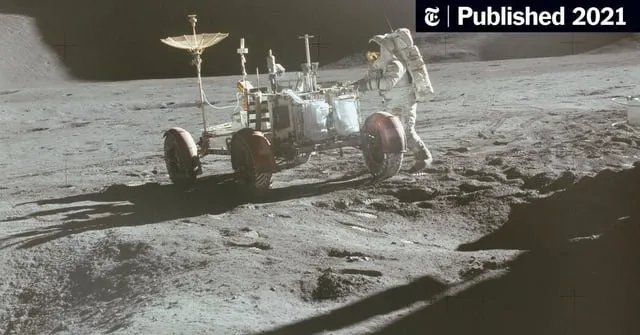
It is the only world beyond Earth where humans have walked.
So when we ask how far away the Moon is, we are not just asking for a number.
We are asking about the distance to the place that first proved humans could leave Earth and stand somewhere else.
That makes the Moon feel close emotionally, even though physically it is far enough away to swallow 30 Earths between us.