
ESA’s Euclid space telescope has just given us one of the most stunning views ever taken of our own galaxy. Not another distant galaxy billions of light-years away. Not a black hole eating breakfast either. This time, Euclid looked closer to home, straight into the crowded heart of the Milky Way.
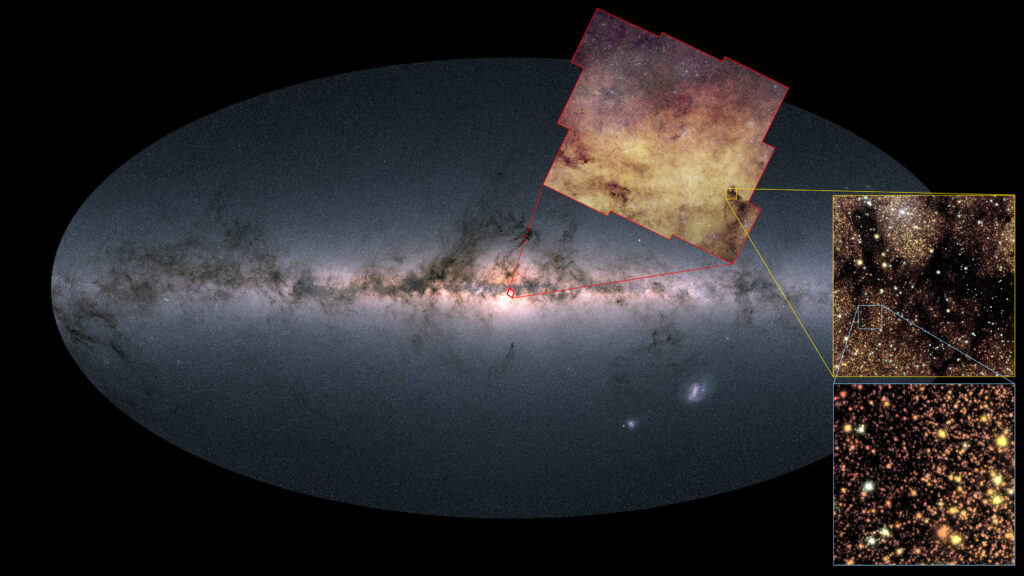
The result is the largest and most detailed visible-light image ever made of the center of our galaxy, packed with more than 60 million stars. That number is almost ridiculous. Sixty million stars in one image. Most of us struggle to organize 60 files on a desktop without creating a folder called “New Folder Final Final 2.” Meanwhile, Euclid casually maps a stellar crowd so dense it looks like the galaxy spilled a box of diamonds across space. But this image is not just beautiful. It could help astronomers find and confirm planets around other stars.
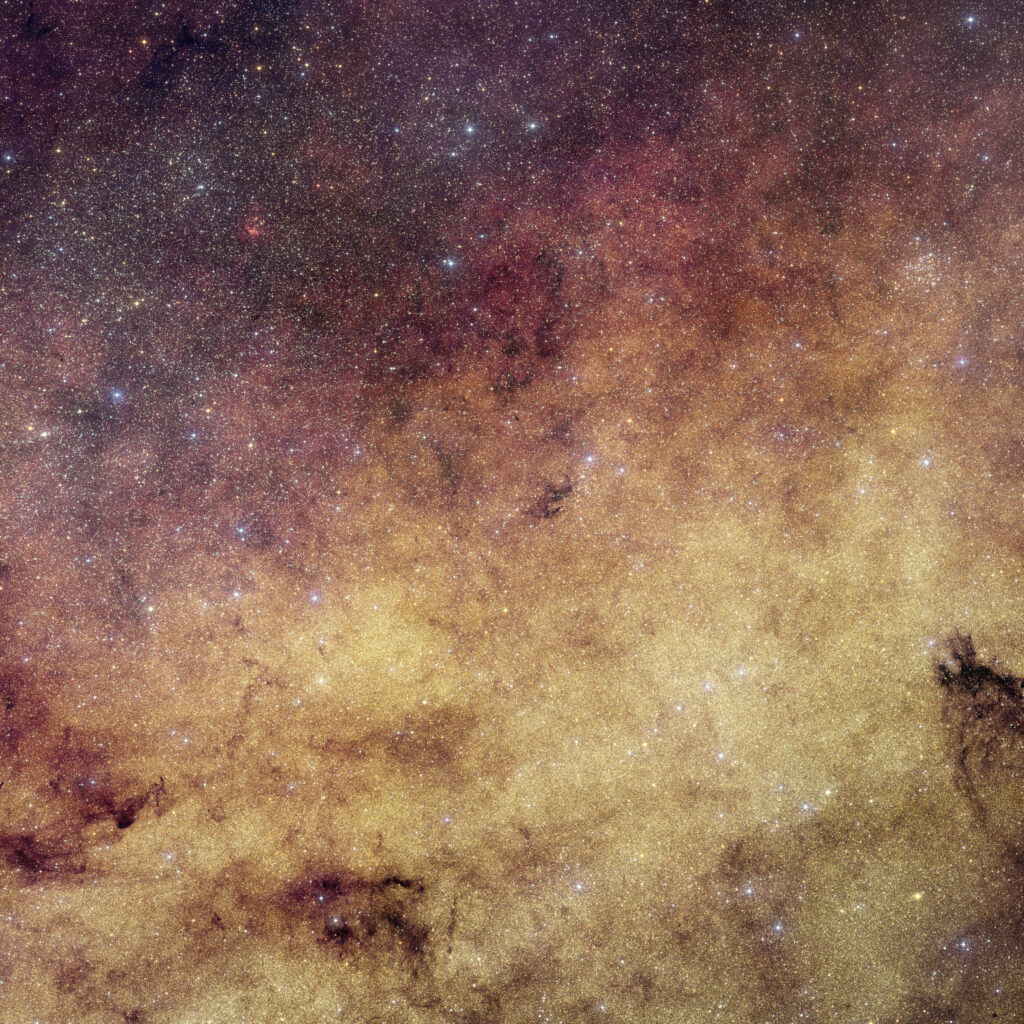
Euclid captured a huge view of the Milky Way’s central bulge, the dense region of stars near the centre of our galaxy. This part of the sky is extremely crowded. From Earth’s perspective, stars overlap, dust clouds block light, and the whole region becomes difficult to study clearly. Euclid managed to separate individual stars across this crowded region, revealing more than 60 million of them in visible light. That is what makes the image so impressive.
It is not just a pretty space picture. It is a high-resolution map of one of the busiest parts of our galaxy. The image also shows dark patches where thick clouds of dust block the stars behind them. These areas may look empty at first, but they are not empty at all. They are places where dust is hiding the light from the stars beyond. In other words, even the “blank” parts of the image are telling scientists something.
The Milky Way’s center is not just visually dramatic. It is scientifically valuable. Euclid’s image gives astronomers a detailed reference point for future observations, especially for studying exoplanets through a method called microlensing.
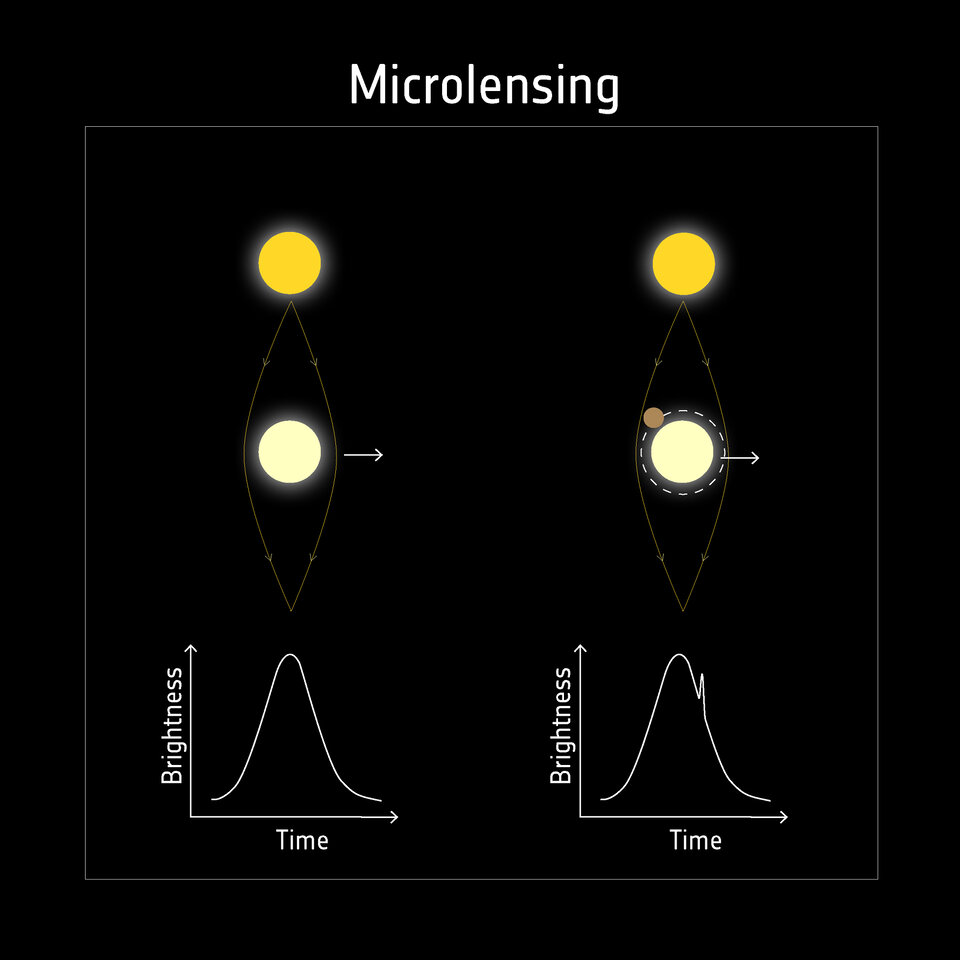
Microlensing happens when the gravity of one object bends and magnifies the light of a background star. If a planet is orbiting the foreground object, it can create a small extra signal in that light. That tiny change can reveal a planet that would otherwise be invisible. The problem is that these signals are subtle, and the Milky Way’s centre is incredibly crowded. To understand what is happening, scientists need clear images showing exactly where the stars are and how they move over time. That is where Euclid helps.
Its image gives astronomers a detailed snapshot of the region. Future missions, especially NASA’s Nancy Grace Roman Space Telescope, can compare their observations against it. So this image is not just a one-off “look how shiny space is” moment. It is a foundation for future planet hunting.
The funny part is that Euclid was not mainly designed to study stars in the Milky Way. Its big mission is to map the wider universe and help scientists investigate dark matter and dark energy, two of the biggest unsolved mysteries in cosmology.
But Euclid’s camera is extremely good at taking wide, sharp images. That makes it useful for more than its main mission. For this observation, Euclid turned its gaze toward the bright and crowded center of the Milky Way. In just one day of observing, it produced a view that would take many other observatories far longer to build. That is the kind of telescope you want. Built for dark energy but also excellent at galactic crowd photography.
Could This Help Find New Planets?
Yes, but not in the instant “new planet found today” way. Euclid’s short observation was not long enough to catch new microlensing events by itself. Those events need repeated monitoring over time. But Euclid’s image can still help confirm planets found later.
By comparing future observations with Euclid’s earlier snapshot, scientists may be able to measure how stars have shifted and separate the objects involved in microlensing events. That can help confirm the existence of exoplanets and measure their masses. This is especially useful because microlensing can reveal planets that are hard to detect with other methods, including cold planets far from their stars.
Those are the kind of worlds that do not always show up easily in other surveys. So Euclid may end up helping astronomers discover or confirm hidden planets in one of the most crowded regions of the sky. Not bad for a telescope that was supposed to be busy investigating the dark side of the universe.
A New View of Our Own Galaxy
There is something oddly powerful about this image. We often talk about galaxies as distant objects. Andromeda. Messier 87. The early universe. Tiny smudges of light that need giant telescopes and serious maths to understand.
But the Milky Way is our galaxy. We live inside it. That makes studying it strangely difficult. It is like trying to understand the shape of a house while standing inside one cupboard.
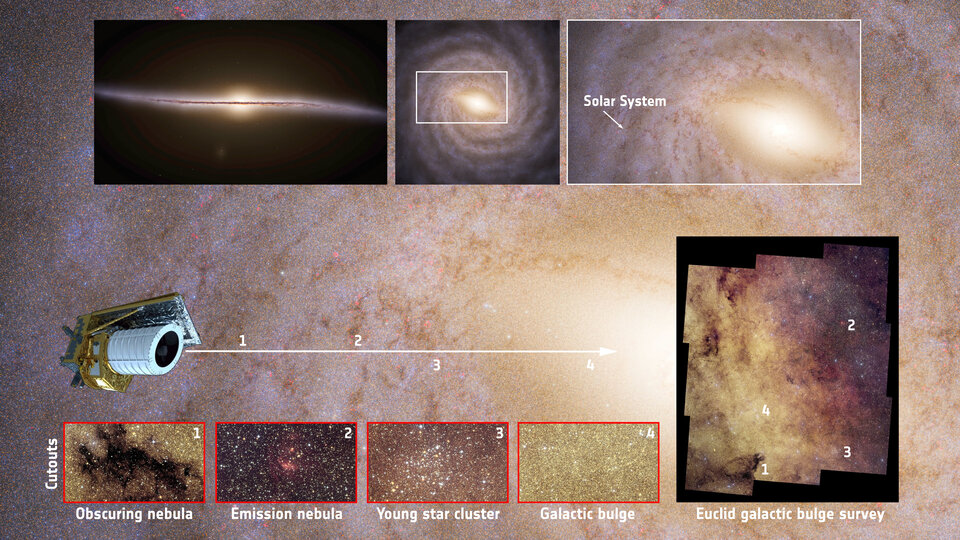
Euclid’s image gives us a cleaner look at one of the most crowded and important regions of that house. It shows the central bulge, dust clouds, star clusters, glowing regions, and millions upon millions of individual stars. It is both familiar and alien. Our galaxy is home, but most of it is still completely beyond human experience.