
But Is It Evidence of Life?
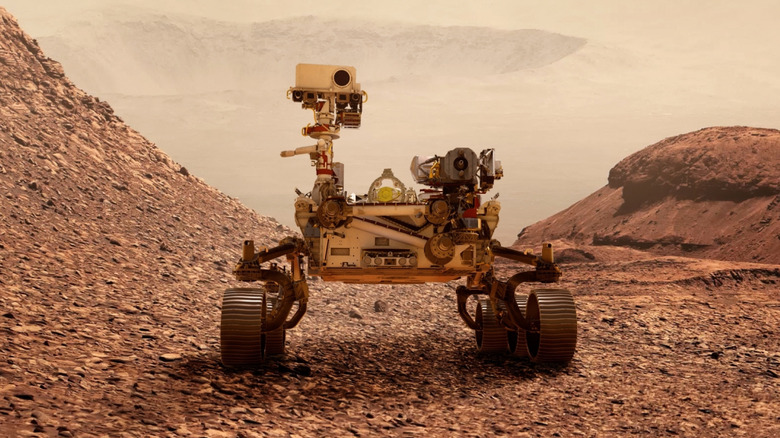
NASA’s Perseverance rover has found complex organic molecules in ancient rocks on Mars, adding another intriguing clue to one of the biggest questions in science: could Mars have once supported life?
The discovery comes from mudstone rocks in Jezero Crater, a region believed to have once held water billions of years ago. That already makes it one of the most interesting places on Mars. Ancient water, preserved rocks, and now complex carbon-based material — naturally, people are going to ask the obvious question.
Did NASA just find life on Mars? Not quite.
Organic molecules are carbon-based compounds. On Earth, they are closely linked with life, but they can also form without biology. Meteorites, volcanic activity, water-rock reactions, and other natural chemistry can all produce organic material. So this is not proof of Martian microbes. NASA has not announced aliens. Nobody needs to start building a welcome mat for little green bacteria just yet.
But it is still important.
What makes this discovery stand out is the type and location of the material. Perseverance detected complex organic carbon inside ancient Martian mudstones, rocks that formed in an environment where water once existed. Mudstones are especially interesting because, on Earth, they can preserve traces of ancient chemistry for extremely long periods of time. That means these Martian rocks may have protected chemical clues from a much wetter period in Mars’ past.
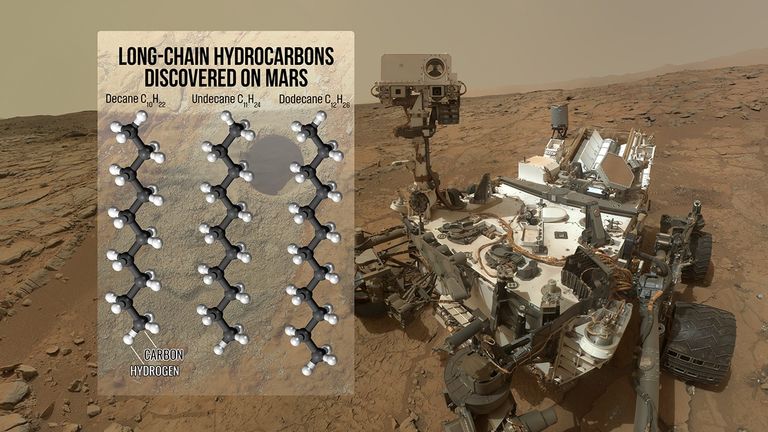
The rover made the detection using SHERLOC, an instrument designed to scan rocks for minerals and organic compounds. Scientists found the material in an area called Bright Angel, part of an ancient river valley that once fed into Jezero Crater. This matters because Jezero was not chosen randomly. Perseverance landed there because scientists believed it was one of the best places on Mars to search for signs of ancient habitability.
So far, that choice is looking pretty good.
The frustrating part is that Perseverance cannot fully answer where the organic material came from. It can detect and map these compounds, but it cannot prove whether they were made by life or by non-biological chemistry. That is why Mars sample return matters so much. To properly test these rocks, scientists need laboratory instruments on Earth, not just a rover doing its best from millions of miles away with a very expensive space toolkit.
For now, the safest answer is this: NASA has not found life on Mars, but it has found another serious clue that ancient Mars had the right ingredients and environments to make the question worth asking. And that is the real story. Not aliens. Not proof. Not clickbait.
Just a cold, dry planet that keeps handing scientists small pieces of a very old puzzle.